Sewer, Drain & Plumbing — Open 24/7
Plumber in Santa Monica, CA
Sewer camera inspections, backed-up lines, leaks and water heaters for Santa Monica’s older homes and apartment buildings — licensed plumbers, free estimates, and the price agreed before the work starts.
- 24/7 emergency service
- Free estimates
- Same-day availability
- Priced before work starts
- Financing available
- Se habla español
I want to thank Eric and the team at RPM They came on time, gave a reasonable price and did the job all while keeping my house and work area clean. The quality of customer service is second to none 10 out of 10 would recommend!
Plumber that came to do the service Erick.. was very professional and was very knowledgeable. He took care of my problems. Thank you Erick and RPM Plumbing. I will for sure use them in the future.
Request a free estimate in Santa Monica
No charge for the estimate, and we price the job before any work starts. Prefer to talk? Call (888) 855-6680 — someone answers 24/7.
- Serving
- Santa Monica and the Westside of Los Angeles
- Hours
- Open 24 hours a day, 7 days a week
- Dispatched from
- 1601 Paramount Blvd., Montebello, CA 90640
- License
- Licensed, bonded and insured — CSLB #1004038
- Estimates
- Free, with the price agreed before any work starts
- Languages
- English and Spanish
- Financing
- Available through Hearth for larger repairs and replacements
- Emergencies
- Nights, weekends and holidays on the same number
Local, Licensed & Available 24/7
About Our Santa Monica Plumbers
Rooter & Plumbing Masters is a licensed plumbing, drain and sewer contractor (California CSLB #1004038) that works in the houses, apartment buildings, shops and restaurants of Santa Monica. Our Santa Monica plumbers are dispatched from our own shop in Montebello, and a person picks up the phone at every hour. An estimate costs nothing, and the price is agreed with you before a tool comes off the truck.
Santa Monica is a city of its own, not a district of Los Angeles. Its original township was subdivided in 1875, and the city gives November 30, 1886 as the date it incorporated. Today it covers 8.3 square miles, has about 93,000 residents, and is bounded by the ocean on the west and by the City of Los Angeles on every other side. Pacific Palisades, Brentwood, Sawtelle and Venice are Los Angeles neighborhoods on the far side of that line. For plumbing the line matters: building permits, the water system and the sewers on this side of it are Santa Monica’s own, and theirs are the rules this page describes.
The city’s 2018 historic resources survey tells how the housing arrived. Ocean Park, once called South Santa Monica, began in the late 1800s as beach cottages and filled in with bungalows, bungalow courts and apartment houses. North of Montana was mostly built out by the 1930s. In the Pico neighborhood, modest bungalows went up from the 1920s through the 1940s, and many were replaced with multi-family buildings after World War II. Through the middle of the city the survey describes bungalow courts and courtyard apartments from the 1920s and 1930s, joined after the war by large apartment buildings and dingbats.
The 2021-2029 Housing Element puts numbers on it. Of 52,629 housing units counted in 2020, 40,853 were in multi-unit buildings. Almost 85 percent of the housing is more than 30 years old, and renters made up 71.4 percent of households in 2019. The document notes that most residential structures begin to need work on major components, plumbing among them, as they approach 30 years. That fits what we find. Cast iron and clay drain lines in a building from the 1950s or 60s are typically failing by now, and in an apartment building the drains are shared, so one failure reaches several households.
Plumbing Problems We See Most in Santa Monica
A sewer lateral nobody has looked inside. Here the lateral is the property owner’s from the building to the city main, and the city’s lateral brochure says about half of the roots in its sewer system get in through defective private laterals. A sewer camera inspection in Santa Monica shows roots, cracks, low spots and shifted joints before you buy a building or pay for a repair. Who owns and repairs which part of a lateral is set out further down this page.
Backups in buildings with shared drains. When several units empty into one line, a blockage surfaces in the lowest unit, whoever caused it. We clear the main line and then run a complimentary camera inspection, every time, which shows whether the line was simply blocked or is damaged as well. Sewage coming up in a tub is an emergency plumbing call at any hour; a line that is merely slow is a job for drain cleaning.
Kitchen drains that are slow again a month after the cable. A cable only pokes a hole through the grease, which then closes over. Hydro jetting is our usual fix, because it washes the grease off the pipe wall. Grease is the city’s concern too: its 2023 sewer plan counts 474 permitted businesses subject to inspection for fats, oils and grease. Restaurant, shop and apartment lines are part of our commercial plumbing work, and a line with a history can go on scheduled plumbing maintenance.
Pipe that is broken, not blocked. A crack, a sag that holds water or a joint that has come apart will not clean out. A short damaged stretch is a drain repair; a line failing along its length is a drain replacement. We look first at a repair that needs no trench.
Low pressure and repeat leaks in old supply piping. Galvanized steel water pipe, where a building still has it, rusts from the inside until the opening narrows and the pipe begins to leak. One bad section can be repaired. Piping that has leaked in several places is a reason to price repiping.
Water heaters. Santa Monica softens its groundwater before delivering it (the hardness figures are below), but tanks wear out all the same. A tank that has started to leak cannot be repaired; it means a new water heater, every time. We do water heater work in houses, apartment buildings and businesses.
Leaks you cannot see. A water bill that has jumped, a damp wall, water coming through a ceiling. The municipal code says no person shall allow water to leak from any pipe or plumbing fixture, and it makes the customer pay for all water lost through plumbing that is not kept in repair. Our leak detection finds the place, so one spot is opened and not a whole wall.
Gas lines and earthquake valves. The city lists SoCalGas as the natural gas provider, and the piping past the utility’s meter belongs to the property. We repair leaks and run new gas lines in Santa Monica for ranges, dryers, water heaters and backyard fire pits, trenching included, each pressure tested before use. Santa Monica has a seismic gas shutoff rule of its own, and motion-type earthquake shutoff valves are something we install.
Get Our Services
Reach a Plumber for a Santa Monica Home or Building
Start with what you can see, hear or smell, and we will work out what kind of visit it is. Sewage rising in a shower, a pipe that has let go inside a wall, a building with no hot water: those are emergencies, taken at any hour. A faucet that drips or a toilet that will not stop filling is everyday plumbing repair, set for a time that suits you. Owners, managers and tenants can all call, though work on a building’s plumbing is the owner’s to approve. Our Santa Monica plumbers answer at (888) 855-6680, where you get a person and not a recording. Se habla español.
Experienced Professionals
Plumbing Services for Santa Monica Homes and Businesses
We work in every part of the city: Ocean Park on both sides of Main Street, Downtown, the apartment streets between Wilshire Boulevard and Montana Avenue, North of Montana up to San Vicente Boulevard, the Pico neighborhood beside the Santa Monica Freeway, and the blocks south of Pico Boulevard. Each truck carries a sewer camera, a hydro jetter and electronic leak detection equipment, the listening gear that finds a leak in a pressurized pipe by its sound. For a sewer line under a driveway, a courtyard or a tree worth keeping, ask about trenchless repair. We do it three ways, by cured-in-place pipe lining, by pipe bursting and by an epoxy spray coating for cast iron pipe, and the camera’s findings decide which. We also install and repair fixtures, among them sinks and showers and bathtubs. You get the estimate free and the price in advance.
Our Plumbing Services in Santa Monica, CA:
Sewer Laterals in Santa Monica
Who Owns and Repairs a Sewer Lateral in Santa Monica?
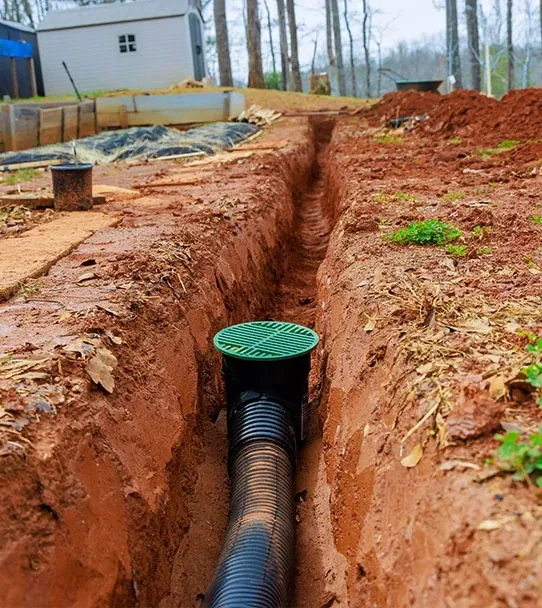
The property owner does, all the way to the main. Santa Monica’s sewer permit page says property owners are responsible for the sewer connection, or lateral, from their property to the city’s main in the street or alley. The municipal code calls the pipe in the street or alley a house connection sewer and requires the owner of the property served to maintain it in a safe and sanitary condition. It also allows up to two lots on one house connection sewer, so it is worth knowing whether yours is shared before a repair is priced.
What the city keeps up is the main: about 154 miles of sewer pipe, by the count in its 2023 sewer system management plan. The sewage itself leaves the city for a treatment plant that belongs to the City of Los Angeles, under an agreement between the two cities.
Permits, and Who May Work in the Street or Alley
- On the property. Replacing drain or sewer pipe on private property is plumbing work under a permit from the Building and Safety Division.
- In the street or alley. The code requires a written permit before anyone constructs, alters or repairs a house connection sewer. Clearing a stoppage needs none, unless pipe has to be replaced or the street or sidewalk opened. Public Works issues sewer permits, and its number is (310) 458-8737.
- License classes. For a sewer lateral, the city’s permit page lists contractor licenses in Class A, C-34 and C-42, and the code requires the work to be done by a contractor bonded with the city. A city inspection is required for lateral repairs.
- Materials. The sewer plan gives PVC as the city’s standard sewer pipe and cured-in-place pipe as the method for any lining.
Here is what that means for a Santa Monica job. Our crews clear a lateral from the cleanout to the city main, and they repair and replace sewer pipe the whole way out to it, the stretch under the street or alley included. That stretch is done under the Public Works sewer permit, with the city inspection that lateral repairs require. On either side of the line the plan starts with a repair that needs no trench, and digging is kept for a pipe that leaves no other choice.
Before a Remodel or a Purchase
Public Works’ standard construction notes for building projects say the city strongly urges applicants to inspect the existing sewer connection, and they recommend a new one, from the property line to the main, when it is damaged or more than 30 years old. A buyer takes over the whole lateral with the building, the street section included, so the time to look inside it is before the sale closes. When we inspect a lateral for a buyer, the video and a written summary are part of it.
If a Sewer Backs Up in Santa Monica
- Stop the water. Every drain in a building ends in the same pipe, so a flushed toilet upstairs adds to what is coming out below. In an apartment building that means telling the other units.
- Call the city about the street. The lateral brochure asks residents to call the Wastewater Division first about overflows and backups, and the city’s 2026 water quality report lists Wastewater at (310) 458-8532. A blockage in the main is the city’s to clear.
- A blocked lateral is the owner’s. When a private lateral overflows toward the street, the sewer plan has city staff contain the spill and direct the owner or manager to call a private plumber immediately. With no effective response within about an hour, the plan allows the property’s water service to be turned off temporarily.
- Know your cleanout. That is where we open a blocked main line. A building without one is cleared through a toilet or from the roof vent, and a cleanout can be added afterward.
Santa Monica’s Water
Santa Monica’s Water: the Source, the Meter and the Pipe Past It
Water here is a city service, run by the Water Resources Division of Public Works. Its June 2026 water quality report, covering 2025, says Santa Monica gets up to 75 percent of its water from local groundwater, pumped from wells inside the city and just outside it. The rest is imported water bought from the Metropolitan Water District and blended with the local supply. The groundwater goes through the city’s own treatment plant first: iron and manganese removal, filtration, softening by flow reversal reverse osmosis, disinfection and fluoride. The report says Santa Monica is the first city in the nation to soften groundwater that way.
How Hard Is Santa Monica’s Water?
Softer than the groundwater it starts as. For 2025 the report lists an average hardness of 103 parts per million for the local well water leaving the city’s plant, in a range of 80 to 129. The two imported supplies averaged 140 and 234. Softening, as the report explains it, removes scale-forming calcium and magnesium, and the city does that at the plant. The report adds that the minerals left in the water form a film of scale that helps protect household plumbing from corrosion. On treatment at home, its position is that buying a filter or a home treatment system is a matter of personal preference. The plumbing code has one rule on the subject: a water softener system may not discharge to a dry well, apart from a narrow exception tied to regional water quality limits.
The Valve at the Meter Is the City’s; the One at the Building Is Yours
The municipal code makes the service line and the meter city property, and it bars anyone but the water division’s own staff from operating the shutoff valve at the meter without the division’s consent. Its answer for emergencies is a second valve: every consumer is to install a shutoff inside the property line, where it can be reached in a hurry. If city staff have to come out and shut off the water for a leak on the property because that valve is missing or will not work, the code charges for each trip. If yours is seized, buried or was never there, we can fit a working emergency shutoff valve. For a planned shutoff at the meter the division’s number is (310) 458-8531, and its 24-hour line for water emergencies is (310) 434-2672.
When the Meter Shows Water Moving
Santa Monica bills water every two months, which used to mean a leak could run that long unnoticed. The city has been installing advanced meters that record use in 15-minute intervals, and its EyeOnWater portal can send an alert when use runs outside a household’s normal range. When the portal or the meter shows flow and you cannot find where it is going, call us. Electronic leak detection, our listening equipment, traces the sound of water escaping a pressurized line, and tracer gas is used where that is not enough. Under a slab there are two fixes, a repair at the spot or a new line routed around it, and we generally advise the reroute. An opened floor gets a rough concrete patch, and the finish flooring is yours to put back.
Santa Monica’s Earthquake Gas Shutoff Rule
Natural gas is not a city service; the city’s utility preparedness page lists SoCalGas among Santa Monica’s main utility providers. What the city regulates is the piping on the customer’s side of the meter, where its plumbing code has required a seismic gas shutoff device since January 1, 2008. The owner of a building with fuel gas piping must take out a permit, install one and maintain it when any of four things happens:
- a permit is applied for to construct a new building;
- a permit is applied for to alter or add to an existing building, and the work is valued at more than ten thousand dollars;
- the property is sold or exchanged;
- the gas line between the utility’s meter and the building is replaced, in part or in whole.
The device must be one certified by the State Architect. In a condominium the duty falls on the unit’s owner, for the piping serving that unit, unless a device already covers the whole building. A device installed before 2008 still counts while it remains in place and maintained. We install motion-type earthquake shutoff valves, and the estimate is the time to ask whether your building already has one.

Your Friendly Neighborhood Plumber
We proudly provide high-quality plumbing services to customers in:
- Acton
- Alhambra
- Arcadia
- Atwater Village
- Burbank
- California City
- City of Commerce
- Covina
- Downey
- East Los Angeles
- El Monte
- Fullerton
- Glendale
- Huntington Beach
- Inglewood
- La Habra
- Lake Hughes
- Lake Los Angeles
- Lancaster
- Leona Valley
- Littlerock
- Llano
- Long Beach
- Los Feliz
- Mojave
- Montebello
- Monterey Park
- Norwalk
- Palmdale
- Pasadena
- Pearblossom
- Pico Rivera
- Placentia
- Quartz Hill
- Rosamond
- San Gabriel
- San Pedro
- Santa Clarita
- Santa Monica
- South San Gabriel
- Sun Village
- Torrance
- Van Nuys
- San Fernando Valley
- South Bay
- West Covina
- Whittier
- Orange County
- Inland Empire
We’re known for customer-focused service, honest pricing, and professional results. No matter how far our service area grows, we remain committed to delivering personalized plumbing care to every customer we serve.
Additional Information
Which office issues plumbing permits in Santa Monica, and who can pull one?
The Building and Safety Division does, through the Permit Services Center at City Hall, 1685 Main Street, open 8:00 a.m. to 3:00 p.m., Monday through Thursday. The process is paperless: applications are uploaded to the city’s electronic plan review system before anyone visits the counter. Santa Monica has adopted the 2025 California Plumbing Code with local amendments. Its administrative code exempts clearing a stoppage, stopping a leak, and removing and resetting a toilet, provided no valve, pipe or fixture is replaced or rearranged; other plumbing work needs a permit. The city says a building permit can be issued only to a licensed contractor, an authorized agent, or a residential property owner under certain circumstances, and its handout adds that a residential tenant cannot pull one unless authorized as an agent. So if the home or residential building is yours, the choice is yours as well. We can pull the permit for you, or you can pull it yourself if you prefer.
What are Santa Monica’s construction hours?
The noise ordinance limits construction activity anywhere in the city to 8:00 a.m. to 6:00 p.m. Monday through Friday and 9:00 a.m. to 5:00 p.m. on Saturday, with none on a Sunday or on eight listed holidays. A repipe, a water heater replacement or a lateral replacement is therefore planned for a weekday or a Saturday. Our phones are answered around the clock regardless, because a burst pipe or a backed-up sewer keeps no schedule.
Do you work in apartment buildings with tenants in place?
Yes. The Housing Element says rent-controlled units make up slightly more than half of all the housing in the city. Owners and property managers call us for shared drain lines, central water heaters, gas lines and repipes. The city’s tenant protection chapter applies to that work. If construction could affect the habitability of an occupied unit, the owner needs an approved construction means and method plan before the permit is issued, and the tenants must be notified that the work does not end their tenancy. Whether a job triggers the plan is the building officer’s decision. A repipe, with the water off while lines are changed, is one to ask about early.
Santa Monica Plumbing Help at Any Hour
Rooter & Plumbing Masters is veteran-owned, and both our office and our crews speak Spanish. A kitchen line snaked twice since spring, a shutoff valve that will not turn, a water bill that jumped while the place sat empty: each is easier to deal with before it turns into water on somebody’s floor.
Call (888) 855-6680 for a free estimate in Santa Monica, CA. Same-day service is available.
Common Questions
Plumbers in Santa Monica, CA — Common Questions
Is there a plumber available in Santa Monica right now?
Yes. Rooter & Plumbing Masters runs open 24 hours a day, 7 days a week, including nights, weekends and holidays. Calls to (888) 855-6680 are answered by a person rather than an answering service, and crews are dispatched from our own shop at 1601 Paramount Blvd. in Montebello.
How much does a plumber cost in Santa Monica?
It depends on what is wrong, how accessible the pipe is and whether the fix is a repair or a replacement, so no honest plumber can quote a figure over the phone without knowing those. The estimate is free, and you get the price for the job before any work starts. Financing is available if the repair is a large one.
Are you licensed, bonded and insured?
Yes. Rooter & Plumbing Masters holds California CSLB contractor license #1004038 and carries insurance. You can verify the license yourself through the CSLB's public license lookup, and we would rather you did.
How quickly can you get to Santa Monica?
For emergency calls we usually arrive within the hour. For everything else we offer same-day availability and will not promise an arrival window before we know what else is running. Call (888) 855-6680 and the dispatcher will give you a real time rather than a guess. Santa Monica is inside our regular service area, so it is not an out-of-area trip.
What plumbing problems do you handle in Santa Monica?
Clogged and slow drains, sewer line backups and rooter work, hydro jetting, sewer camera inspections, leak detection, water heater repair and replacement, gas line repair and installation, repiping and pipe repair, toilets, sinks, showers and tubs, emergency shutoff valves, and commercial plumbing. Residential and commercial both.
¿Hablan español?
Sí. Se habla español — you can call (888) 855-6680 and speak Spanish with our office and with the crew that comes out. Parts of our site are published in Spanish as well.